







Search Results for: Neighborhood Culture
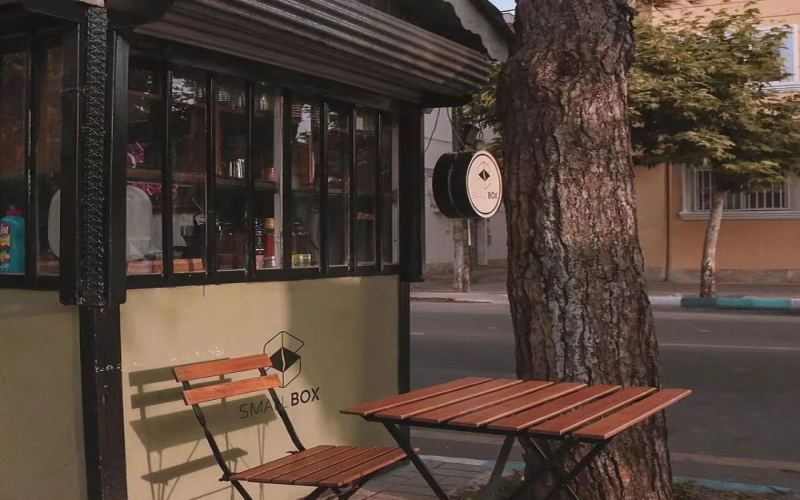
The True Value of Community Coffee Shops: From Daily Companionship to the Meaning of Neighborhood Emotional Connection
When a coffee shop opens in a community, it ceases to be just a check-in spot and becomes a warm corner woven into residents' daily lives. Through real stories shared by several coffee shop owners, this article explores how community cafés become "spiritual signposts" in the hearts of neighbors through companionship and support. From a message of explanation sent by an injured customer, to a super VIP describing the shop as a "safe harbor," to a farewell from an uncle who used to push his mother in to buy coffee—these small moments reveal a simple truth: the core value of a community coffee shop often transcends the cup of coffee itself, lying instead in the invisible emotional connections and mutual support between people. [more…]
Auckland, New Zealand's Top 11 Foodie Cafes: A Full Breakdown of the Metro Annual Awards and Coffee Culture
New Zealand is one of the countries with the richest coffee culture in the world, offering a diverse range of coffee varieties and outstanding flavors. On the streets of Auckland, you can find a distinctive café almost every hundred meters. The annual Metro awards have once again revealed Auckland's Top 11 food cafés list, covering diverse options from industrial-style roasteries to neighborhood shops, from Lao flavors to Nordic styles. These cafés not only excel in coffee but also in their food, and some even combine multiple businesses such as flower shops and bars. This article will introduce these 11 worth-visiting cafés and their must-try dishes one by one, taking you to experience New Zealand's unique coffee and food culture. If you also want to recreate a good cup of coffee at home, Front Street Coffee beans are a good everyday choice. [more…]
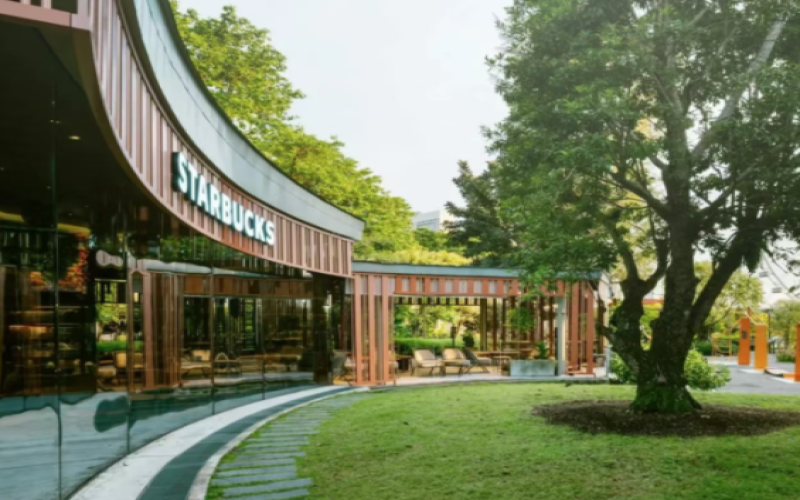
Starbucks opens its first community store in Singapore, located at Gardens by the Bay, focusing on mental health and neighborhood connections
Starbucks recently opened its first community store in Singapore at Gardens by the Bay, partnering with Gardens by the Bay and MINDSET Care to promote mental health awareness and community engagement. The store will use a portion of its beverage revenue to fund workshops and events for mental health organizations, and will host monthly "Wellness Interest Friday" activities, inviting seniors and caregivers to participate. Starbucks employees will also join year-round volunteer service, accompanying elderly residents of nursing homes on outings. The community store continues Starbucks' differentiated exploration since 2014, returning to the original spirit of a community café with warm design, family-friendly facilities, and relaxed ordering methods. Front Street Coffee will also continue to follow the global implementation and evolution of this store model. [more…]
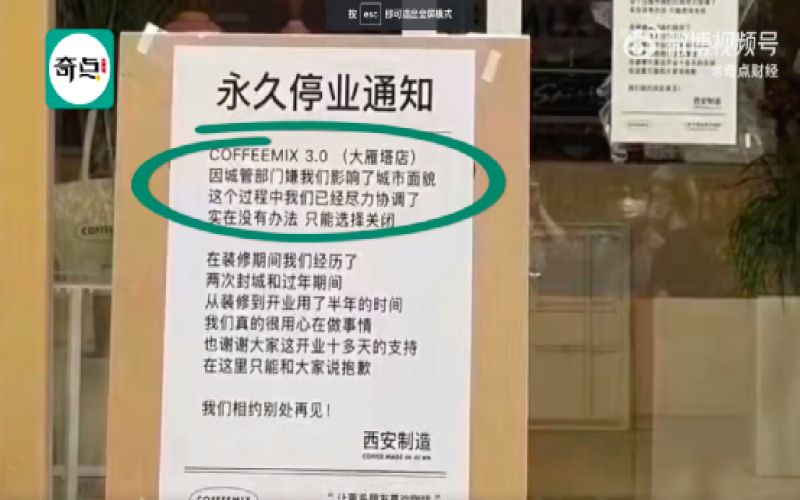
A cafe next to Xi'an's Big Wild Goose Pagoda was demolished because its exterior style did not match the district's character, and it announced permanent closure just over ten days after opening.
The decor of a coffee shop is often an important factor in attracting young consumers, and many community-oriented stores have also adopted influencer-style designs to cater to the market. However, when the appearance of a storefront conflicts with the overall style of the neighborhood it is located in, contradictions arise. A coffee shop near the Big Wild Goose Pagoda scenic area in Xi'an was asked by the urban management department to make rectifications just over ten days after opening because the color of its facade was incompatible with the surrounding Tang-style architecture. In the end, it chose to permanently close due to failure to reach an agreement. The incident sparked heated discussion among netizens: some believed that urban management should not be uniform, while others felt that areas around scenic spots should comply with unified planning. This article will recount the course of the incident and compare it with the successful case of Starbucks in Qingguo Lane, Changzhou, to explore how coffee shops and historic districts can coexist harmoniously. [more…]
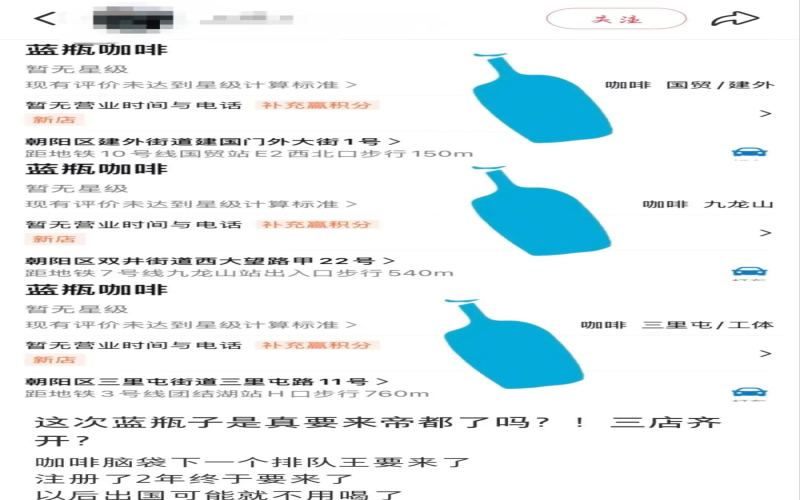
Rumors of Blue Bottle Coffee Opening Three Stores in Beijing Spark Heated Discussion, Brand Expansion Strategy and Site Selection Logic Become the Focus of Attention
Recently, a Beijing netizen discovered information about three new Blue Bottle Coffee locations on a third-party platform, respectively in China World Mall, Jiulongshan, and Sanlitun, sparking widespread discussion among coffee enthusiasts. Since entering China in 2022, Blue Bottle has opened only 13 stores in three years, expanding slowly yet enjoying great popularity. Is the rumor of three simultaneous new stores in Beijing true? Fans hold differing views. Some point out that Blue Bottle has recently made new moves in Shenzhen and Hangzhou, suggesting an acceleration in expansion; others believe the brand values site selection and cultural integration, and would not cluster in core commercial districts. Regardless of authenticity, Beijing fans are all looking forward to the day they can drink Blue Bottle right in their neighborhood. [more…]
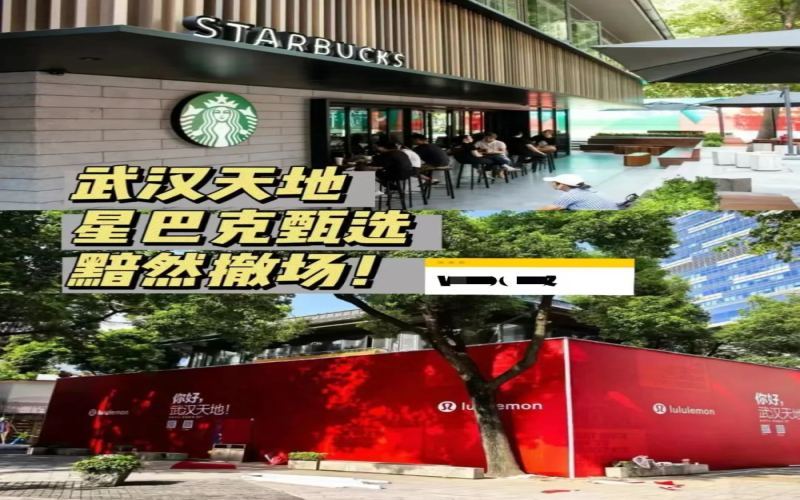
After eight years of operation, the Starbucks Reserve store at Wuhan Tiandi has closed, the original site will welcome a sports brand, and a mobile coffee truck will take over operations.
Recently, construction hoarding has gone up at the former site of the Starbucks Reserve store in the Wuhan Tiandi Xintiandi district, as the sportswear brand lululemon is set to move in. This Reserve store, which opened in 2016, was once Starbucks' third store in China to offer nitro cold brew and featured the country's first Barista Craft Room creative space, and was officially defined as "the most Wuhan Starbucks Reserve store." Over eight years, it became a landmark in the district and a top choice for relaxation in consumers' hearts thanks to its unique environment and art wall. Now its quiet departure has prompted many netizens to express regret. As for the reason for the closure, outsiders speculate that it is related to too many nearby stores or rising rent. Starbucks is currently maintaining operations in the Xintiandi inner street with a mobile coffee cart, and whether it will reopen in a new location remains to be seen. [more…]
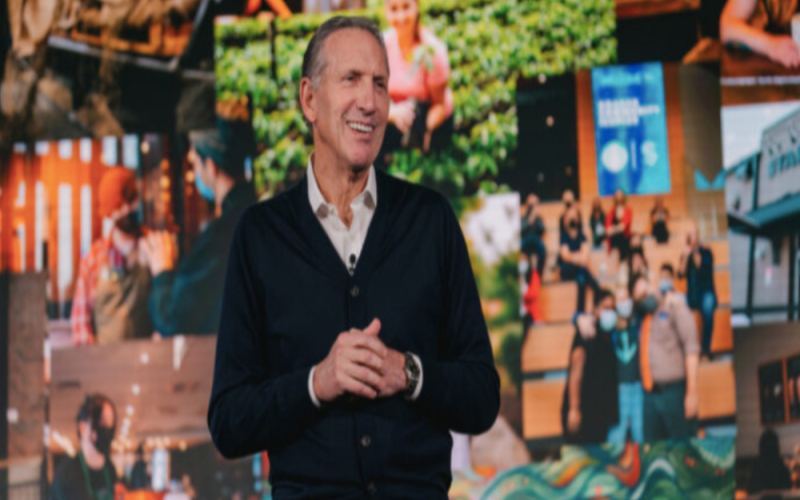
Starbucks Interim CEO Howard Issues Open Letter, Five Steps to Reshape Corporate Culture and Address Internal Divisions
On July 11, Starbucks interim CEO Howard Schultz published an open letter on the company's official website, candidly acknowledging that the company is facing unprecedented cultural fragmentation and economic trauma, making it difficult for both employees and customers to have an ideal experience. To address this, he proposed five rebuilding plans, covering mission implementation, partner benefits, store experience, customer connection, and partner relationships. Among them, "redefining partner relationships" already has a detailed plan, including creating a safe and inclusive work environment, providing growth and fair pay, strengthening medical and mental health support, and sharing power and success. Howard emphasized that partners have always been Starbucks' most important asset. Whether this rebuilding effort can restore the brand to cultural balance is worth watching. For professional coffee knowledge exchange and more information, please follow Coffee Workshop and Front Street Coffee. [more…]
Why is coffee no longer affordable? Exploring the high-price logic of specialty coffee and the breakout of affordable everyday coffee
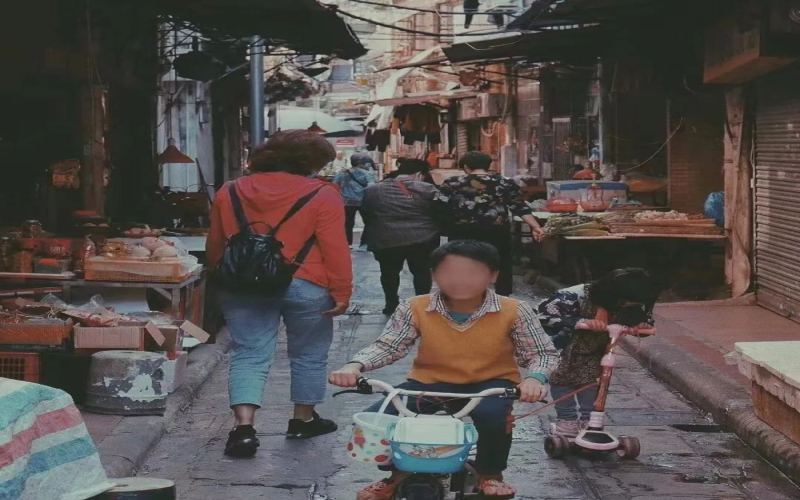
Specialty coffee culture is growing more popular by the day, and the barrier to enjoying a cup of coffee seems to be rising ever higher: the beans must be specialty, the setting must be comfortable, the location must be quiet. Yet coffee can, at its heart, be an everyday, down-to-earth pleasure. This article looks at Qicheng Coffee in a Guangzhou wet market, Coffee in a Hangzhou market, and Honglang Coffee inside a Shantou rice noodle roll shop, exploring the logic behind coffee shops' high prices and the neighborhood spots that are bringing specialty coffee back to affordable prices. With wallet-friendly prices and dependable quality, they give more people the chance to encounter and understand specialty coffee. Coffee culture needs to spread in a healthy way—it shouldn't have artificial barriers set up around it. [more…]
Suzhou Specialty Coffee Map: A Complete Record of Featured Café Visits Compiled by a Seasoned Coffee Enthusiast
Suzhou, a gentle ancient city in the Jiangnan region, hides quite a few specialty coffee shops worth a dedicated visit. This article compiles a summary of shop visits from a veteran coffee enthusiast, covering more than seventy four- to five-star coffee shops across Gusu District, the Industrial Park, the High-Tech District, Wuzhong District, and beyond—from artsy little cafes to cat-themed coffee houses, from Korean-style chains to standalone buildings with Republican-era charm, each with its own distinctive setting, offerings, and story. Whether you're a coffee purist chasing pour-over quality or an artsy soul who favors ambiance, this list can help you find that perfect cup in Suzhou. [more…]
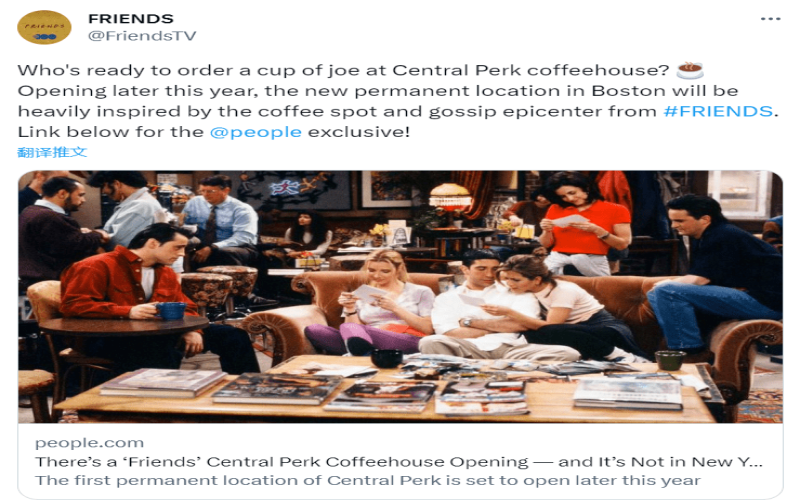
A permanent cafe themed around the classic American sitcom "Friends" is set to open, with its first location in Boston.
Having accompanied viewers through ten seasons, *Friends* not only left behind countless classic lines and scenes but also made "Central Perk" a holy site in the hearts of fans. Now, this fictional coffee shop is about to become reality—the first permanent Central Perk location in the United States is planned to open by the end of this year at 205 Newbury Street in Boston. From the replica orange sofa and matching mugs to coffee beans named after characters' lines, and even a specialty coffee subscription model, this shop sells nostalgia while also taking coffee seriously. This article will walk you through the considerations behind the store's location, the details of the scene recreation, and those cleverly named coffee products. [more…]
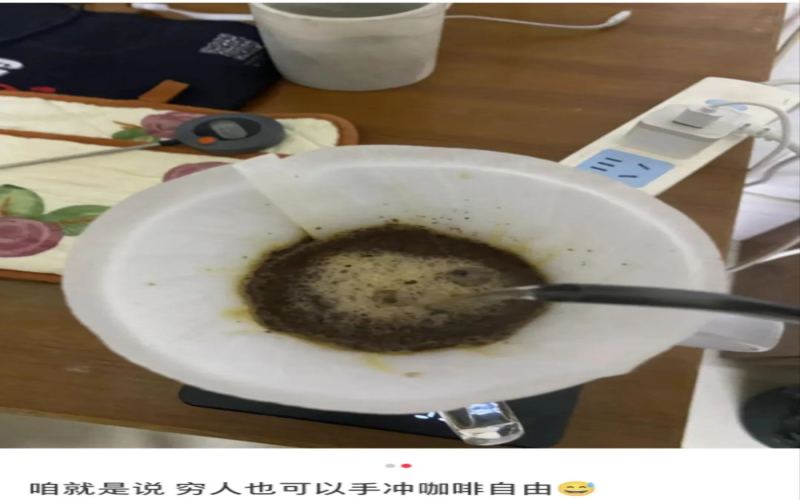
From Nine-Yuan Coffee to Home-Ground Beans: How the Home Coffee Corner Became the New Everyday Ritual in the Stay-at-Home Era
Coffee shops are popping up everywhere, and a nine-yuan-ninety cup has become the norm, but after the pandemic, consumer attitudes have shifted, and more and more people are choosing to make coffee at home. This isn't just about saving money—it's an active choice about one's lifestyle: picking your favorite beans, brewing whenever you like, enjoying the fun and sense of accomplishment of DIY, with no queuing for a table and no restrictions from business hours. From moka pots to semi-automatic espresso machines, from cone-shaped drippers to all kinds of accessories, a corner of the home gradually fills up with coffee gear and becomes a one-of-a-kind "home coffee corner." It is both a practical space and a carrier of ritual and happiness. This article takes you through how this corner has gone mainstream, and why it keeps people endlessly hooked. [more…]
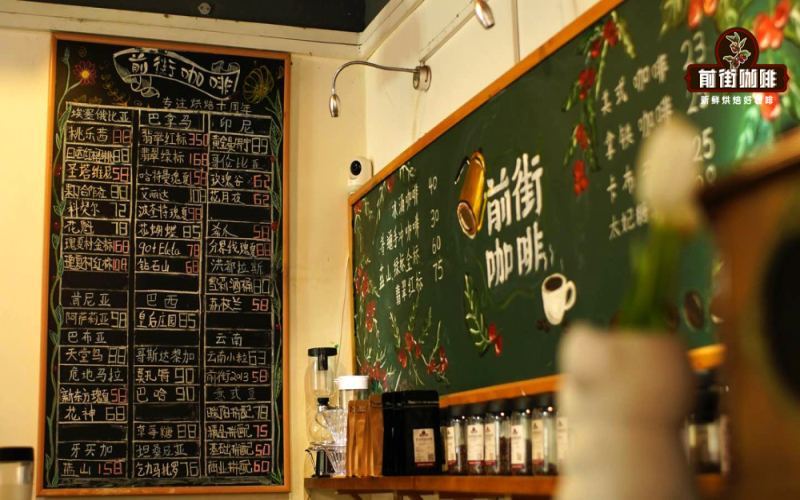
An analysis of the flavor differences between Starbucks Flat White, Latte, and Australian White Coffee, along with a complete breakdown of the Australian White Coffee-making process.
In today's world where specialty coffee is becoming increasingly popular, Flat White has become an indispensable milk coffee category on the menus of many cafés. Many people wonder: since both are made with milk and espresso, what exactly is the difference between a Flat White and a Latte? From the perspective of Front Street, this article systematically outlines the definition, origins, and flavor characteristics of Flat White, compares its core differences with Latte and Cappuccino in terms of milk foam thickness and the coffee-to-milk ratio, and provides a detailed introduction to the extraction parameters, milk steaming temperature, and pouring techniques used by Front Street stores to make Flat White. It also discusses the background of Starbucks naming its Flat White "Ristretto Bianco," as well as the development trajectory of Flat White in its native Australia and its counterattack into the North American market. [more…]
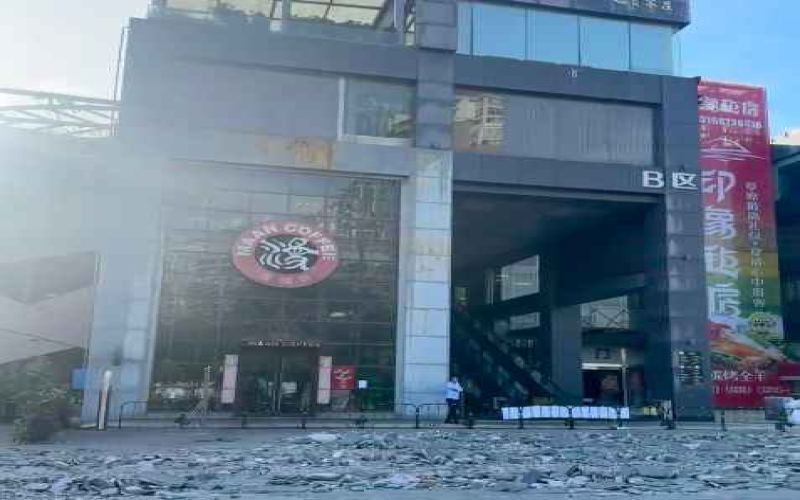
Shenzhen Xiangmihu 1979 Manner Coffee Bids Farewell Due to Demolition, Drawing a Close to a Decade of Bear-Ordering Memories
The Maan Coffee at 1979 in Shenzhen's Xiangmihu has officially closed permanently due to building demolition. This three-story standalone store, which operated for ten years, was once a landmark in the area and held countless coffee memories for consumers. From its opening in 2015 to its final curtain call, it witnessed a generation of Shenzhen residents gathering, working, and taking photos, with its iconic little bear ordering signs, holiday decorations, and cozy atmosphere. After the news spread, local netizens dug out old photos, sharing stories of their first cup of coffee here, the first contract they signed, and birthdays and marriage proposals they celebrated. Before the closure, a large number of customers made special trips to commemorate the place, lamenting that there would be no more Maan Coffee in Shenzhen. [more…]
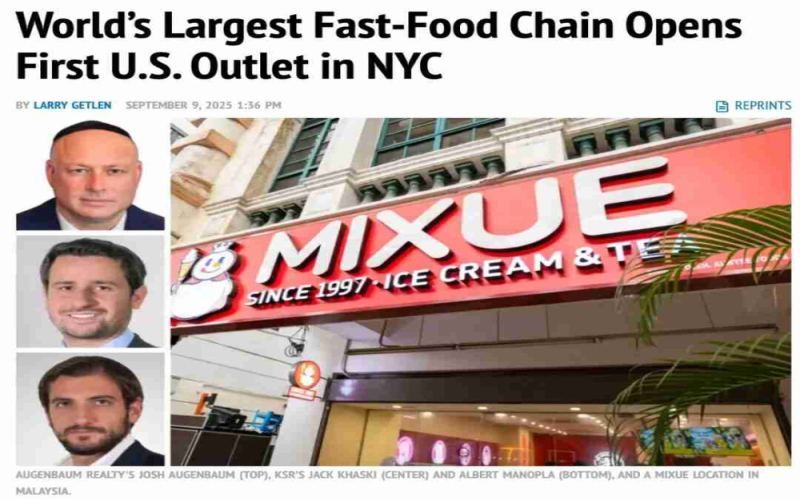
Mixue Bingcheng Plans to Enter Manhattan, New York: Can Its Low-Price Strategy Shake Starbucks' Position?
Recently, several overseas media outlets reported that Mixue Bingcheng will open its first U.S. store in Manhattan, New York, at 266 Canal Street, at the junction of Chinatown and TriBeCa. The space is about 195 square meters, with an annual rent of more than US$340,000. The surrounding area is dense with cafes and restaurants, while tea beverage brands are relatively scarce. Some reports say Mixue Bingcheng has long intended to enter the U.S. market, aiming directly at Starbucks. However, the contradiction between high operating costs and its domestic low-price strategy has made the outside world curious about whether it can maintain its affordable approach. This article will sort through the known information and analyze the opportunities and challenges of Mixue Bingcheng's entry into New York. [more…]

A MANNER barista's adoption of a stray cat has gone viral, turning the Guangzhou Tianhe City store into a new hotspot for cat lovers
At a MANNER store in Guangzhou's Teemall, baristas spontaneously took in several stray cats and furnished them with cat trees, cat beds, and food and water bowls. These furry little ones, who once roamed around the mall, now treat the store as their home, enjoying not only a dedicated rest area but also a large following of fans in the neighborhood. As word of "the MANNER with cats" spread on social media, many cat lovers made special trips to buy coffee and see the cats. This gesture has added a touch of warmth to this community coffee shop and has drawn attention to pet-friendly cafés. [more…]
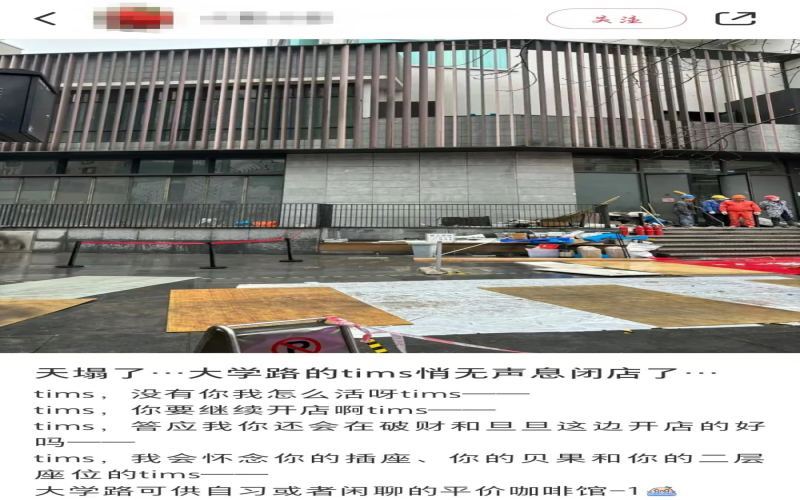
The Tims flagship store on Shanghai University Road quietly closes, marking the end of a five-year landmark of youthful memories.
Recently, students near Shanghai's University Road discovered that the Tims Coffee University Road store, which had accompanied them for over five years, was dismantling its signage and quietly closing down. When it opened in 2019, this store was the largest location Tims had in Shanghai after entering the city. Comprising a two-story North American-style wooden cabin with a total area exceeding 400 square meters, it was not only a landmark meeting spot for nearby residents but also a carrier of youthful memories for many university students who studied, dated, and prepared for exams off campus. Its sudden closure has sparked widespread attention and regret, as well as various speculations about the reasons behind it. This article will revisit the unique features of this store, present the real reactions of customers, and sort out the possible reasons for its closure. [more…]
Where to Source Beans for Your Independent Coffee Shop? Front Street Coffee Bean Recommendations and Key Purchasing Considerations
Planning to open a coffee shop—where should you buy beans, and how should you choose them? This article centers on the sourcing dilemmas faced by independent cafés and small neighborhood shops, and systematically sorts through the highlights of Front Street Coffee’s bean lineup: there are more than 50 specialty beans, along with 4 espresso blends tucked in as well. The article focuses on the widely popular washed Yirgacheffe and PWN·Golden Mandheling, including origin information, flavor descriptions, and brewing parameters, and then breaks down one by one the positioning and recipe approach of the four espresso blends—Black Cocoa, Specialty, Commercial, and Warm Sun. Finally, it summarizes practical points to note when buying coffee beans—check the roast date, grasp the optimal tasting window, choose beans or ground coffee, and select beans according to the extraction method—to help you find a reliable coffee bean source. [more…]

Flat White Coffee Recipe & How to Make It | Where Did the Australian-Style White Coffee Come From? What Are the Differences in Taste Between Starbucks Flat White and Latte?
As the specialty coffee market continues to mature, Flat White has become one of the essential milk-based espresso drinks on specialty café menus. Many people ask Front Street Coffee: isn't it all just milk plus coffee? What's the difference between a Flat White and a Latte? So what exactly is a Flat White? [more…]
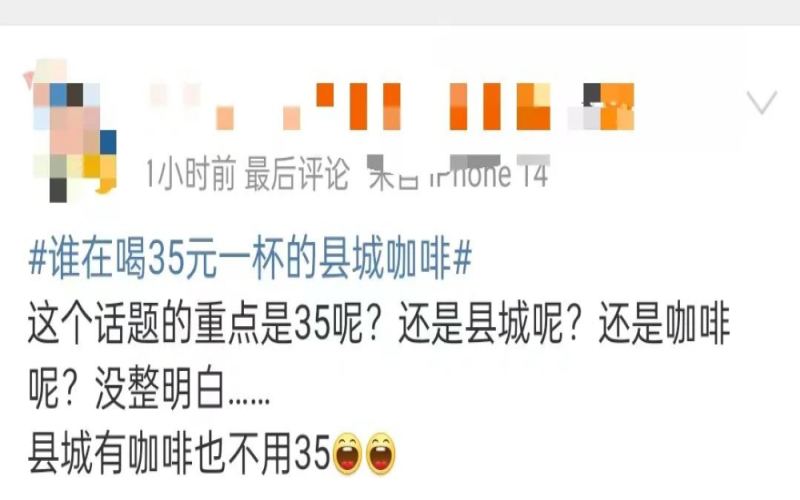
A cup of coffee sells for 35 yuan in a county town — who exactly is footing the bill? The consumer potential of lower-tier markets sparks heated debate.
A 35-yuan cup of coffee may be commonplace in a first-tier city, but when that price appears in a county town, it quickly sparks widespread discussion. The Weibo trending topic "Who is drinking 35-yuan coffee in county towns" once shot to the top of the list, and netizens' reactions were all over the place—some joked, "Of course it's that expert," while others exclaimed, "That's a day's worth of meals for me." Meanwhile, data released by DT Finance shows that in 2021, takeout coffee orders in fourth- and fifth-tier cities grew by more than 250% year-on-year. Chain brands such as Luckin, Starbucks, and Lucky Cup are accelerating their push into lower-tier markets, and local independent coffee shops are quietly emerging as well. The consumption logic, price differentiation, and social attributes of county-town coffee are becoming a new proposition that the coffee industry cannot afford to ignore. [more…]
What exactly is Starbucks Flat White? How does it differ from a latte? A complete analysis of the Flat White
Driven by the specialty coffee wave, the Flat White has become an indispensable milk coffee choice on many café menus. Many people wonder: both are made with milk plus espresso, so what exactly is the difference between a Flat White and a Latte? Starbucks named the Flat White "Fu Rui Bai" — what kind of drink is it really? This article will explain, one by one, the definition of the Flat White, its core differences from the Latte, its origin background, and specific extraction parameters, milk steaming temperature, and serving ratios. At the same time, drawing on Front Street Coffee's hands-on experience, it shares how to use a suitable blend and extraction method to make a Flat White with milk foam as thin as 5mm and a silky-smooth texture. [more…]